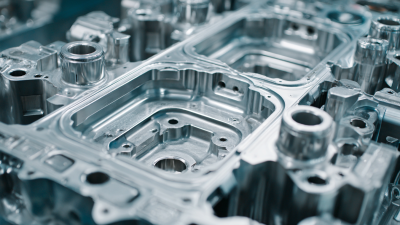
Choosing an Automotive Mold manufacturer in 2026 means looking beyond the quoted price. A mold may appear excellent on a polished presentation, yet struggle during production. Ask how the supplier handles design reviews, steel selection, cooling layout, and dimensional checks. Request examples of comparable parts, not just impressive factory photos. Look for documented trial results and clear plans for correcting defects. A sample part should fit its mating components, not merely look smooth under showroom lights.
Toyota production pioneer Taiichi Ohno’s principle, “Without standards, there can be no improvement,” offers a useful way to assess a supplier. Check whether the manufacturer uses consistent inspection methods and records changes between mold trials. Ask who owns each decision when a gate, vent, or cooling channel needs revision. Small details matter. A poorly placed vent can leave burn marks; uneven cooling can cause warpage and slow a production line. Compare maintenance support, communication, and the supplier’s ability to meet realistic schedules. These factors shape the mold’s lifetime cost.
Still, a checklist cannot predict every production problem. That is worth remembering. Ask for evidence, but also speak directly with the engineers who will build and tune the tool. Their answers may reveal more than a sales presentation. This guide outlines practical questions for comparing Automotive Mold manufacturers, reviewing technical capability, and judging long-term support. No supplier is perfect; the goal is to find one that identifies risks early, explains trade-offs clearly, and responds when the first trial is not quite right.
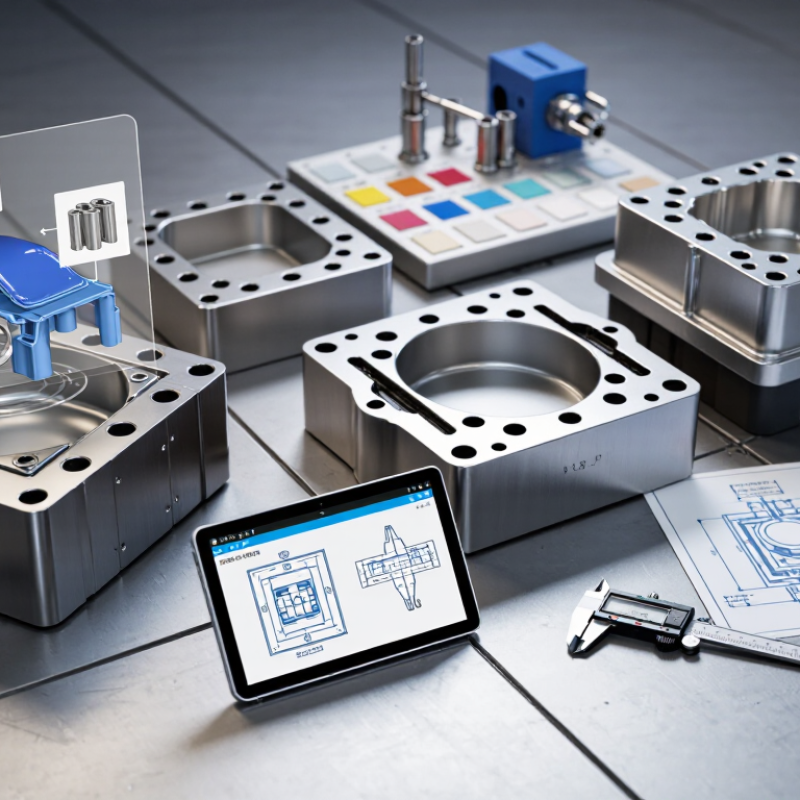
Before searching for an automotive mold manufacturer, define the part, process, and production case. Is the program for an interior trim panel, a connector housing, or several related parts? Record resin, finish, critical dimensions, expected variants, and whether you need prototype or production tooling. OICA reported 92.5 million motor vehicles produced worldwide in 2024. That scale signals a large market, not a guaranteed order forecast. Your own demand assumptions matter more.
Set annual and peak-month volumes, launch dates, tool life, and acceptable cycle time. Specify cavity count, press capacity, sampling milestones, and who owns design changes. The IEA’s Global EV Outlook 2025 reported more than 17 million electric-car sales in 2024, over 20% of global car sales. Shifting vehicle mixes can change part variants and volume plans. Build that uncertainty into the mold brief.
Put measurable acceptance criteria on paper: dimensional tolerances, surface defects, scrap rate, uptime, and validation samples. Ask suppliers to state assumptions behind cycle-time and tool-life estimates. Early forecasts are often wrong. That is worth admitting. A volume target without a launch ramp, maintenance allowance, or revision plan can make competing quotes look comparable when they are not. Keep the first brief specific, but leave room to revise it.
When choosing an automotive mold manufacturer in 2026, check its IATF 16949:2016 system against real production records, not a certificate alone. Confirm the certificate scope covers the relevant site and activities. Then ask to trace one mold change from customer approval through engineering revision, trial results, and final release. Can the team show who approved each step?
Review control plans, measurement-system analysis, calibration records, and nonconformance actions. IATF clauses 8.5.1.1, 7.1.5.1.1, and 10.2.3 address these controls. For a mold supplier, request cavity-level dimensional data, tool-maintenance history, and trial-shot records. Check whether corrective actions changed the process, not just the paperwork. A tidy audit file can still mask inconsistent shop-floor practice.
Digital evidence matters. Deloitte’s 2024 Smart Manufacturing Survey, based on 600 manufacturing executives, found that 86% viewed smart manufacturing as a primary driver of competitiveness over the next five years. That is a signal to examine how suppliers preserve traceability and use production data—not a reason to favor dashboards over people. Ask operators to explain how they contain a defect and who gets notified. Their answers may be uneven. That deserves a closer look.
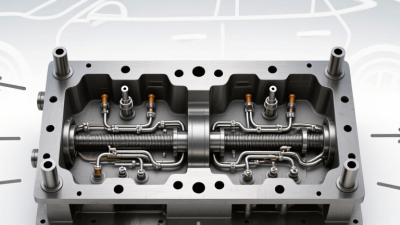
Choosing an automotive mold manufacturer in 2026 means checking evidence, not just polished presentations. Ask for tool-design reviews covering parting lines, cooling channels, venting, and expected maintenance access. A cooling layout that looks tidy on screen may still leave a hot spot near a thick rib. Request steel grade, hardness range, heat-treatment records, and the reason each was selected for your resin and production volume.
Compare promised life with a recognized benchmark. The Society of the Plastics Industry’s mold classification system rates Class 101 molds for at least 1,000,000 cycles, Class 103 for 500,000, and Class 104 for 100,000. These are classification targets, not guarantees for every part or process. Ask for cycle logs, repair history, and examples from molds with similar materials and geometry. Check whether “mold life” means cycles before major refurbishment or total service life. Those are not the same.
Tips: Request a sample inspection report. Look for dated measurements, cavity-by-cavity results, and clear acceptance limits. Ask how wear is tracked at gates and slides. If the supplier cannot show the records, pause. A neat spreadsheet is useful, but it is not proof by itself. Compare the documents with physical inspection findings; that step can be imperfect, and it deserves a second look.
How to Choose an Automotive Mold Manufacturer in 2026?
Audit Readiness Against AIAG APQP’s 5 Phases and PPAP’s 18 Elements
Choose a mold manufacturer that can explain its work across all five APQP phases: planning, product design, process design, validation, and feedback. Ask to trace one recent mold change from its approved drawing to the inspection record. Evidence matters. A dated revision, clear owner, and documented approval reveal more than a polished presentation.
For PPAP, check how the supplier supports all 18 elements within the agreed scope. Relevant records may include process flow diagrams, PFMEAs, control plans, dimensional results, material test reports, measurement studies, and the Part Submission Warrant. Not every element belongs directly to a mold maker; customer-specific requirements and supplier responsibilities matter. Ask how tooling trials, cavity changes, and corrective actions connect to the customer’s submission package.
Look for controlled records you can sample during an audit: tool build logs, steel certificates, maintenance history, measurement equipment calibration, and trial-run reports. Keep it traceable. A capable supplier should identify missing evidence and explain who will close each gap before a production milestone. Gaps happen. I would also ask how lessons from a failed trial update the process, because that answer can be less tidy—and more revealing—than a checklist.
Illustrative audit-readiness assessment aligned with AIAG APQP’s five phases and PPAP’s 18 required elements.
How to use this chart: Treat the percentages as sample self-assessment scores, not industry benchmarks. When evaluating a mold manufacturer, verify documented evidence for each phase and each applicable PPAP element, including tooling records, dimensional results, process studies, and change controls.
In 2026, compare automotive mold manufacturers using verified operating data, not polished promises. Request itemized quotations covering mold steel, machining, sampling, revisions, and validation. Check whether each quote uses the same part specifications and acceptance criteria. A low price means little if essential trials are excluded.
Rank lead time against dated project schedules and recent delivery records. Ask for planned and actual milestones, including design approval, first trial, and production-ready samples. Verify capacity with current machine availability, shift patterns, and active project loads. A large machine list alone does not prove open capacity. Compare service KPIs too: response time, issue-closure time, and corrective-action records.
Tips: Ask for anonymized KPI evidence from comparable projects. Confirm how delays and design changes affect quoted dates and costs. Record each figure, its source, and reporting period. A spreadsheet can still miss practical details, such as who approves a tooling change. That gap deserves a direct question. Select a manufacturer whose evidence is traceable, whose assumptions are clear, and whose team explains weak results honestly. Even reliable data needs context. A strong ranking should reflect both measurable performance and the risks your program can tolerate.
| Ranking Factor | Weight | KPI to Compare | Required Verification | Supplier Result | Score |
|---|---|---|---|---|---|
| Total Mold Cost | 25% | Comparable, itemized price for the same scope, including design, tooling, trials, sampling, and stated exclusions. | Written quotation with currency, validity period, payment terms, scope, and change-order rules. | Not provided | Pending |
| Lead Time | 20% | Calendar weeks from approved design and deposit to the agreed trial or acceptance milestone. | Dated project schedule defining start conditions, milestones, customer approval dependencies, and delivery point. | Not provided | Pending |
| Production Capacity | 15% | Available machine capacity and planned hours for the specified mold size, material, and production window. | Current machine list, working-envelope details, capacity plan, and confirmation of subcontracted processes. | Not provided | Pending |
| Quality Performance | 15% | Documented first-pass acceptance, rework, and corrective-action performance for comparable tooling projects. | Recent, dated quality records with definitions, project scope, sample period, and permission to validate references. | Not provided | Pending |
| Engineering and Design Support | 10% | Documented response time for design reviews, manufacturability feedback, and engineering changes. | Named points of contact, escalation process, agreed response-time targets, and examples of review deliverables. | Not provided | Pending |
| Trial and Validation Support | 10% | Availability of mold trials, sampling, measurement reports, and support through agreed acceptance criteria. | Trial plan, equipment details, sample and inspection deliverables, acceptance criteria, and responsibility matrix. | Not provided | Pending |
| After-Sales Service | 5% | Response and resolution process for warranty issues, repairs, spare parts, and production interruptions. | Written warranty, service hours, response commitments, repair terms, and spare-parts availability policy. | Not provided | Pending |