Electronic Mold technology quietly shapes the devices used in homes, hospitals, vehicles, and factories. Its influence appears in tiny connector cavities, polished phone housings, and heat-resistant sensor components. WSTS forecast global semiconductor sales at approximately US$611 billion in 2024, showing the scale behind this supply chain. More chips and electronic assemblies create stronger demand for accurate, repeatable, and durable molds.
However, mold selection is rarely simple. IPC standards emphasize process control, material consistency, and inspection throughout electronics manufacturing. SEMI reports also show continuing investment in advanced semiconductor and packaging capacity. These trends increase pressure on mold suppliers to control flash, warpage, shrinkage, cooling time, and cavity balance. A small defect can interrupt automated assembly. It may also create expensive field failures.
This guide examines ten Electronic Mold types commonly considered by global buyers. The list includes injection molds, insert molds, overmolding tools, two-shot molds, and precision molds for connectors and housings. Each type serves different materials, tolerances, production volumes, and maintenance conditions. Buyers should compare steel grade, tool life, mold-flow analysis, spare-part support, and validation records. ISO 9001 certification can support reliability, but it cannot replace technical evidence.
The terminology is not perfectly standardized. Some suppliers use different names for similar tooling. That matters. A ranking can never fit every factory, market, or product design. Therefore, the following overview combines industry practice, published market signals, and practical purchasing considerations. It also leaves room for correction, because real production results may challenge a neat classification.
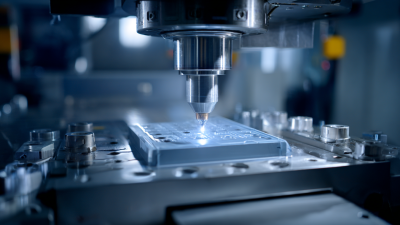
Electronic molds are precision tools that form housings, connectors, buttons, lenses, and insulation parts. They control dimensions, surface texture, cooling, and assembly fit. Injection molds handle many plastic enclosures, while insert molds combine plastic with metal terminals. Overmolding adds protection around wires or delicate components. Compression and transfer molds suit selected thermoset materials and heat-resistant parts. Small errors become visible quickly.
A reliable mold begins with material data, part geometry, and production volume. Engineers check shrinkage, wall thickness, draft angles, gate positions, and cooling paths before cutting steel. For a phone-sized housing, uneven cooling may create warpage near screw posts. That defect can delay assembly and increase inspection costs. Mold steel, cavity balance, venting, and surface treatment also affect service life. Clean vents matter.
Global buyers should request trial records, dimensional reports, maintenance plans, and clear tolerance definitions. Ask how the supplier manages flash, weld lines, ejector marks, and cavity wear. These details reveal process control better than attractive samples. Experienced teams still revise designs after testing. No simulation catches every production issue. A practical review should compare first-shot results with real assembly conditions, not only drawings. The cheapest mold may become expensive when cycle time, repairs, and rejected parts are included.
Top 10 Electronic Mold Types for Global Buyers
How Electronic Molds Are Classified by Function and Design
Electronic molds are easier to compare when buyers study purpose, not shape alone. The ten common groups include enclosure, connector, switch, keypad, cable, lens, heat-sink, battery-tray, PCB-support, and sensor-housing molds. Enclosure molds protect circuits from dust and impact. Connector molds demand tight pin spacing and stable cavity alignment. Lens molds prioritize optical clarity, polish, and controlled shrinkage. Small errors can distort light.
Function defines the first category. Design defines the second. Single-cavity molds suit prototypes or limited production, while multi-cavity molds improve output and consistency. Insert molds combine metal terminals with plastic bodies. Overmolding adds insulation or grip around an existing component. Thin-wall designs reduce material use but require careful filling analysis. Slide cores create side openings, such as USB ports or cable exits. Unscrewing mechanisms support threaded electronic housings.
Material choice changes the mold plan. Flame-retardant plastics may need stronger venting and tighter processing control. Glass-filled materials can increase wear near gates and corners. Buyers should check steel hardness, cooling layout, ejection marks, and expected cycle volume. A polished cavity is not enough. Warpage may still appear after assembly. This classification helps, but real projects rarely fit one box perfectly; early sample testing can expose assumptions that drawings hide.
| No. | Electronic Mold Type | Primary Function | Defining Design Features | Typical Molded Parts | Common Materials and Processes | Key Buyer Considerations |
|---|---|---|---|---|---|---|
| 1 | Connector and Terminal Molds | Produce precise electrical connectors, sockets, housings, and terminal carriers. | Multi-cavity layouts, thin walls, fine cores, tight alignment, and optional progressive stamping sections for metal terminals. | Wire-to-board connectors, board-to-board connectors, plug housings, and terminal blocks. | Glass-filled nylon, PBT, LCP, PPS, or other electrical-grade thermoplastics; injection molding and insert molding. | Pin alignment, flash control, cavity balance, insulation performance, cycle time, and connector pitch capability. |
| 2 | IC Encapsulation Molds | Encapsulate semiconductor dies and bond wires to protect them from moisture, contamination, and mechanical damage. | Transfer-molding cavities, runner systems, precise package outlines, and controlled clamping surfaces. | Plastic-packaged integrated circuits, sensor packages, power devices, and discrete semiconductor packages. | Epoxy molding compounds processed mainly by transfer molding; some packages use compression molding. | Package warpage, burrs, wire-sweep risk, compound flow, thermal cycling, and compatibility with package dimensions. |
| 3 | Lead-Frame Molds | Form or support metal lead frames used for semiconductor assembly and electrical connections. | Progressive die stations for blanking, forming, bending, piercing, and cutoff operations. | Lead frames for small-outline, dual-inline, quad-flat, and other semiconductor packages. | Copper alloys or iron-nickel alloys; high-speed precision stamping and forming. | Strip thickness, burr height, tool wear, pitch accuracy, surface finish, and compatibility with plating requirements. |
| 4 | Coil Bobbin and Former Molds | Create insulating supports for copper wire in transformers, inductors, relays, and other magnetic components. | Thin ribs, winding guides, terminal posts, central cores, and features designed for automated winding. | Transformer bobbins, inductor formers, relay bobbins, and coil supports. | Nylon, PBT, PPS, or other electrical-grade plastics; precision injection molding. | Insulation distance, winding compatibility, terminal strength, core fit, dimensional stability, and heat resistance. |
| 5 | Electronic Housing and Enclosure Molds | Form protective outer shells for consumer, industrial, automotive, and communication electronics. | Large or deep cavities, ribs, bosses, snap-fits, textured surfaces, draft angles, and side-action slides when required. | Device covers, control boxes, sensor housings, remote-control shells, and instrument cases. | ABS, PC, PC/ABS, flame-retardant polymers, or glass-filled plastics; injection molding. | Cosmetic quality, weld lines, sink marks, warpage, assembly interfaces, ventilation features, and surface texture. |
| 6 | Insert-Molding Dies | Combine metal or other preformed inserts with a molded polymer part in one production cycle. | Locating nests, retention features, loading interfaces, and gates positioned to prevent insert movement. | Molded terminals, threaded inserts, shielded connectors, sensor parts, and switch components. | Metal inserts with thermoplastics, thermosets, or elastomers; insert injection molding. | Insert placement accuracy, automation readiness, resin-to-metal bonding, electrical isolation, and cycle consistency. |
| 7 | Overmolding and Two-Shot Molds | Add a second material or layer to improve insulation, sealing, grip, appearance, or strain relief. | Rotating or indexing mold bases, matched interfaces, separate material circuits, and controlled bonding surfaces. | Cable strain reliefs, insulated terminals, soft-touch buttons, sealed sensors, and multi-material housings. | Rigid thermoplastics combined with TPE, TPU, silicone, or another compatible polymer; two-shot or sequential molding. | Material adhesion, shrinkage differences, sealing performance, color separation, mold indexing, and process validation. |
| 8 | Keypad, Button, and Membrane Molds | Produce tactile user-interface components for switching, control, and status input. | Domed key geometry, return features, legends, thin flexible sections, and controlled tactile travel. | Rubber keypads, silicone buttons, switch caps, membrane overlays, and control-panel keys. | Silicone rubber, TPE, TPU, or thermoplastic films; compression molding, injection molding, or film forming. | Actuation force, tactile life, legend durability, flash at parting lines, dimensional repeatability, and chemical resistance. |
| 9 | Micro-Molding Tools | Manufacture very small or highly detailed plastic components for miniaturized electronic assemblies. | Micro-cavities, fine vents, high-precision alignment, miniature gates, and specialized ejection solutions. | Micro-connectors, miniature sensor parts, optical alignment components, and small medical-electronic parts. | LCP, PEEK, PPS, nylon, and other engineering thermoplastics; precision micro-injection molding. | Cavity machining quality, venting, resin flow, measurement capability, tool wear, and automated part handling. |
| 10 | Optical and Light-Guide Molds | Form transparent components that transmit, distribute, or redirect light inside electronic products. | Polished optical surfaces, micro-prisms, light-distribution patterns, controlled draft, and low-defect cavity finishes. | Light pipes, indicator lenses, LED lenses, optical windows, and display-lighting components. | Optical-grade PC, PMMA, COP, or COC; precision injection molding. | Surface roughness, birefringence, haze, gate vestige, optical uniformity, contamination control, and dimensional stability. |
Global buyers of electronic molds increasingly assess tooling by product function, production volume, and material behavior. WSTS forecast the global semiconductor market would reach $687.4 billion in 2025, increasing pressure on suppliers to improve repeatability and delivery speed. The mold choice now affects far more than part shape.
The ten most used electronic mold types include injection molds, insert molds, overmolding tools, two-shot molds, compression molds, transfer molds, progressive stamping dies, precision stamping dies, die-casting molds, and silicone compression molds. Injection molds support housings and connectors. Insert molds secure terminals during molding. Overmolding protects wires and delicate assemblies. Two-shot molds combine materials or colors in one cycle. Compression and transfer molds suit thermoset components. Progressive dies produce metal contacts quickly. Precision dies handle thin terminals. Die-casting molds form aluminum or zinc frames. Silicone molds support seals and flexible keypads.
According to the 2024 Plastics Industry Association outlook, packaging, automotive, and electronics remain major drivers of plastics processing demand. Yet reports often group tooling into broad categories, hiding real purchasing differences. That is a weakness. A connector mold may require cavity balance, venting, and micron-level dimensional control, while a large enclosure needs cooling efficiency and warpage management. Experienced buyers should request steel certificates, mold-flow studies, cycle-time evidence, and inspection records. Shorter lead time sounds attractive. It can also conceal rushed polishing or unstable maintenance planning. The best decision depends on measurable tool life, repair access, resin compatibility, and the supplier’s documented process experience.
Top 10 Electronic Mold Types for Global Buyers
Electronic products commonly use injection, compression, blow, extrusion, rotational, thermoforming, die-casting, rubber, insert, and two-shot molds. Each type demands a different material strategy. Hardened tool steel suits high-volume connector molds, while pre-hardened steel can reduce machining time for shorter runs. Aluminum molds remain useful for prototypes, although their wear resistance is limited. According to PlasticsEurope’s Plastics—The Fast Facts 2024, global plastics production reached about 413 million tonnes in 2023. That scale increases pressure on mold life, recycled-content compatibility, and process stability.
Tolerances should match the material and feature function. ISO 20457 provides guidance for molded plastic parts, while ISO 1101 supports geometric tolerancing on critical interfaces. A connector cavity may require tight pin alignment, but a cosmetic housing usually needs controlled shrinkage and uniform texture. Glass-filled polymers can improve stiffness, yet they may increase tool wear and distortion. The 2024 injection molding market analysis from Grand View Research projects continued growth at roughly five percent annually, making repeatability a practical purchasing requirement. Check cooling layout, vent depth, gate position, and steel hardness before approval. ASTM D638 testing can verify tensile performance, while UL 94 testing helps assess flammability behavior. Standards help, but they do not replace trial shots. A perfect drawing is not always a perfect part. Unexpected warpage still appears. Even experienced teams sometimes underestimate recycled resin variability.
Indicative dimensional tolerance, key materials, and commonly referenced production standards
The chart shows typical achievable dimensional tolerance ranges for precision electronic molds. Lower values indicate tighter molding requirements. Common mold materials include pre-hardened tool steel for general-purpose tooling, hardened stainless tool steel for corrosion resistance, and high-speed or hot-work tool steel for high-wear applications. Production quality is commonly managed with ISO 20457 for plastics moulded parts, ISO 2768 for general dimensional tolerances, and ISO 9001-based quality systems.
Selecting an electronic mold supplier begins with the product, not the catalog. A phone housing may need a precision injection mold, while a connector often requires a multi-cavity mold with tight pin alignment. For thin battery covers, uniform cooling and controlled shrinkage matter greatly. Fit matters. Ask for evidence.
An experienced supplier should explain steel selection, mold-flow analysis, tolerances, cooling channels, and expected cycle life. Request sample parts from similar projects, not only attractive photographs. Check inspection records, trial reports, maintenance procedures, and communication speed. A reliable team will identify risks before cutting steel. It should also confirm whether the mold suits your resin, machine size, annual volume, and surface finish.
I once underestimated gate placement on a small electronic enclosure. The first trial showed visible weld lines near a screw boss, creating extra polishing work. That mistake changed my supplier checklist. Now I ask for filling simulations and review the parting line before approval. Suppliers offering insert molds, overmolding tools, or stack molds should explain repair access and replacement costs. The cheapest quotation can become expensive after repeated corrections. Still, higher pricing is not proof of better engineering. Compare measurable details, including tolerance capability, trial timing, spare-part support, and documented quality controls. A factory visit or live video inspection may reveal practical conditions that a sales presentation hides.