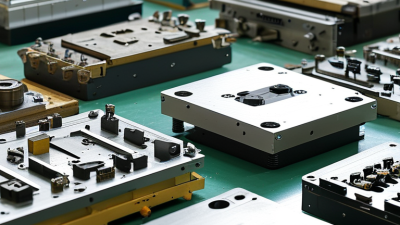
Choosing an Automated Mold supplier is not simply a purchasing decision. It is a production decision.
The right partner can influence cycle time, part consistency, maintenance costs, and delivery reliability. The wrong choice may leave small problems hidden until production begins. A polished sample is not enough. You need evidence from real projects, documented processes, and measurable quality controls.
Dr. David Kazmer, a respected injection-molding researcher and author, has stated, “The mold is the heart of the injection molding process.” His observation remains relevant when evaluating automated systems. A mold must perform repeatedly, not only during a factory demonstration. Ask how the supplier manages steel selection, cooling channels, mold-flow analysis, robotics, sensors, and preventive maintenance. Request inspection records and realistic references. If possible, visit the workshop and observe how technicians assemble, test, and correct molds.
Details matter.
Look closely at machining accuracy, surface finishing, spare-part availability, and communication speed. Check whether the supplier understands your resin, tolerances, annual volume, and automation requirements. A low quotation can appear attractive, but it may exclude testing, modifications, training, or after-sales support. That creates an uncomfortable question: are you comparing prices, or comparing complete production solutions?
No supplier is perfect. Even experienced teams can underestimate a difficult part geometry or changing material behavior. Reliable suppliers admit these risks early. They explain limitations clearly and document corrective actions. This guide will help you compare technical capability, quality assurance, project experience, and long-term service before selecting an Automated Mold supplier.
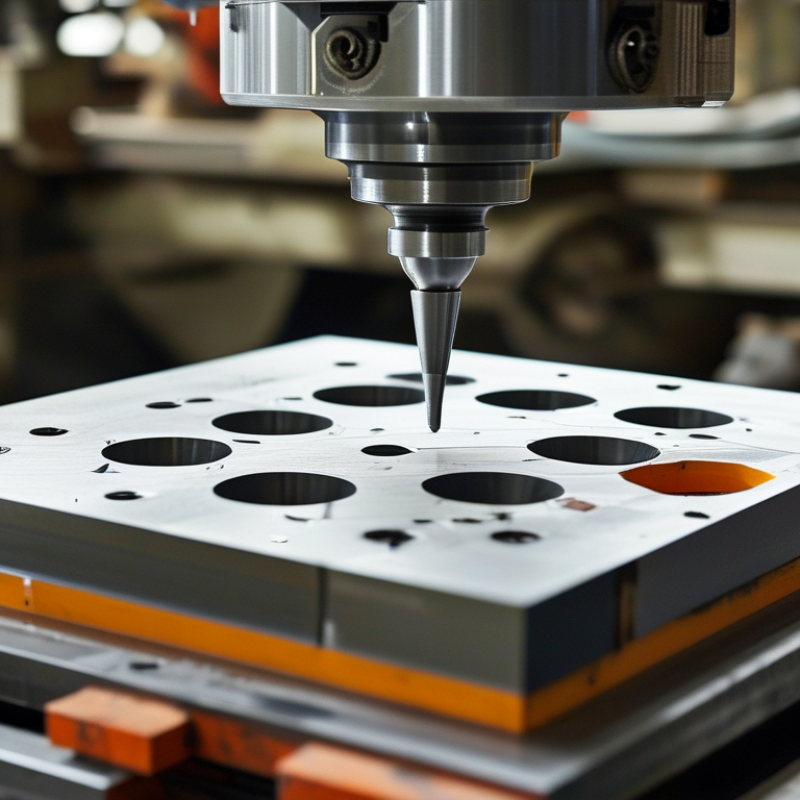
Automation begins with a clear production target, not a polished supplier presentation. Define the required cavity count, annual volume, and acceptable cycle time. More cavities can raise output, but they also increase filling pressure, balancing demands, and maintenance complexity. A four-cavity mold may outperform an eight-cavity design when uptime matters more than theoretical capacity.
Cycle time should be measured in seconds, not vague promises. Ask for cooling assumptions, material data, injection speed, ejection time, and robot handling time. A supplier with strong process knowledge should provide mold-flow evidence and explain how each change affects production. Check whether sensors can monitor pressure, temperature, and part release. Small delays become expensive when automation runs continuously. It happens easily.
Class 101 tooling is commonly specified for production exceeding one million cycles. That rating requires more than hardened steel. Review guide systems, replaceable wear components, cooling channels, surface treatments, and spare-part access. Request inspection records and a documented preventive-maintenance schedule. The supplier should also explain how the mold connects with robots, conveyors, safety interlocks, and the press controller.
A perfect cycle-time estimate is rare. Material batches change. Operators adjust settings. Even a reliable design may need refinement after sampling. I would treat this uncertainty as part of supplier evaluation, not a hidden weakness. Choose a partner willing to test, measure, and revise the mold using traceable data. Their response to an imperfect trial often reveals more than their sales claims.

Choosing an automated mold supplier starts with its management system, not a polished machine list. ISO 9001 certification indicates controlled processes for design, purchasing, inspection, and corrective action. I ask for the certificate number, issuing body, validity dates, and certified site address. Details matter. A certificate covering another factory proves little.
For automotive work, IATF 16949 deserves closer review because it addresses defect prevention, traceability, risk control, and disciplined change management. Request the certification scope and recent audit findings, with sensitive information removed. Then compare them with the supplier’s actual workflow. Can operators identify a mold component by lot number? Are measurement results linked to a drawing revision? A live example is stronger than a presentation. I also check calibration labels on coordinate measuring machines and review how nonconforming parts are quarantined. Not glamorous, but revealing.
Experience has taught me that certificates can expire, change scope, or exclude the production line you need. Ask who owns corrective actions and how closure is verified. A supplier should explain evidence, not merely promise compliance. I would still inspect sample records, maintenance logs, and process capability data before approving a project. My judgment is not perfect; a clean audit record can hide weak daily habits. That is why a factory visit, technical interview, and small pilot order remain useful safeguards.
Choosing an automated mold supplier requires more than comparing machine lists. Precision begins with a clear inspection plan. Ask how the supplier verifies cavity dimensions, parting lines, ejector locations, and cooling channels. A coordinate measuring machine can confirm critical features, while optical inspection helps reveal small burrs, mismatch, or surface defects.
SPI standards provide a useful language for mold surface finish. They classify finishes by texture and polishing quality, helping teams define whether a cavity needs a matte texture, fine polish, or mirror-like surface. However, SPI grades do not guarantee dimensional accuracy. A mold can look excellent and still produce an oversized boss. Request both surface-finish records and dimensional reports.
For critical features, discuss a ±0.01 mm tolerance target before design approval. This target is demanding and may not suit every polymer, geometry, or production volume. The supplier should explain its measurement uncertainty, process capability, steel movement, and expected shrinkage. Ask for sample data from similar molds, not only a polished presentation. In production reviews, engineers sometimes discover that the inspection method itself is inconsistent. That matters. Confirm datum selection, temperature control, calibration dates, and repeatability. A responsible supplier will identify risks instead of promising perfect results. It may recommend tightening only functional dimensions while allowing practical tolerances elsewhere. This approach reduces unnecessary machining, improves tool stability, and makes automated mold production more reliable.
How to Choose an Automated Mold Supplier?
Choosing an automated mold supplier requires more than checking cycle time or quoted price. Safety evidence should lead the evaluation. Ask for a documented risk assessment covering robot motion, mold access, tooling, and maintenance. The supplier should explain how its cell aligns with ISO 10218 principles and applicable local requirements. Request practical records, not polished promises. Review emergency-stop tests, guarding inspections, teach-mode controls, and restart procedures. During a site audit, watch one complete production cycle. Look for unexpected movement, unclear warning lights, or operators reaching past barriers. Small details reveal system maturity.
Sensor integration deserves the same scrutiny. Confirm that door switches, presence sensors, pressure monitoring, and end-of-arm detection have defined safety functions. Ask what happens when a sensor fails, loses power, or sends an inconsistent signal. A safe design should move to a controlled state and record the event. Check validation reports, wiring diagrams, software change logs, and test intervals. Do not accept “self-monitoring” without evidence. In my audits, suppliers often demonstrate normal operation beautifully. The harder test is recovery after a blocked gate or misaligned insert. Ask operators to demonstrate it. One weakness remains common: sensor placement may protect the robot but not the person loading molds. That gap deserves correction before contract approval.
A supplier’s capacity means more than owning several mold machines. Ask how many automated lines can run your mold, including actual machine availability, operator coverage, and inspection resources. A detailed capacity plan should show cavity numbers, expected cycle time, daily output, and backup equipment. Request recent production records when possible. Numbers without evidence are weak.
Factory Acceptance Testing, or FAT, should be specific and witnessed. Confirm the test material, cycle conditions, dimensional checks, sampling frequency, and acceptance criteria. Watch the mold complete repeated cycles, not only one successful run. Ask for recorded data, sample parts, and a signed report. A short video helps, but live testing provides stronger confidence. Sometimes, buyers approve FAT too quickly.
Warranty terms need equal attention. Check coverage for flash, cooling leaks, premature wear, control faults, and repeated dimensional failure. Clarify the warranty period, response time, replacement parts, labor responsibility, and exclusions. A long warranty may still offer little protection if corrective work requires costly shipping. Put every promise in the contract. Verbal assurances fade.
Lead time should include design approval, steel preparation, machining, assembly, FAT, corrections, and shipment. Request a milestone schedule with named owners and weekly progress updates. Confirm the supplier’s current workload before accepting a delivery date. A realistic schedule is more valuable than an impressive promise. Build limited contingency time; urgent changes can expose weaknesses in even capable teams.