How to Choose the Best Electronic Hardware Molds for Your Needs?
Choosing the right Electronic Hardware Molds can significantly impact production efficiency and product quality. According to a report by Technavio, the global market for electronic hardware molds is projected to grow by 5.2% annually from 2023 to 2028. This highlights the increasing importance of selecting optimal molds in today’s competitive landscape.
Industry expert Dr. Lisa Wu emphasizes, "The right mold choice is critical at every stage of the manufacturing process." This sentiment resonates with manufacturers aiming to enhance precision and reduce costs. Yet, many companies still struggle with mold selection, often overlooking the materials and designs that best suit their production needs.
To make informed decisions, businesses must evaluate various options critically. They should consider mold lifespan, production volume, and compatibility with their specific electronics. While it's tempting to choose cheaper molds, this can lead to quality issues later. Reflecting on past experiences can guide manufacturers toward more strategic choices in their mold investments.
Understanding Your Project Requirements for Electronic Hardware Molds
When choosing electronic hardware molds, understanding project requirements is essential. Start by identifying the specific components you need the mold to produce. Consider factors like material type, precision, and design complexity. These aspects significantly influence the mold selection process.
Tips: Before finalizing, analyze the intended use of your electronics. Different applications may require distinct material properties. For example, molds for high-temperature environments will differ from those used in standard conditions. Engage with engineers or design experts to clarify any uncertainties. Their insights can prove invaluable.
Evaluate the lifecycle of your project. Short-term projects may not require complex molds, while long-term commitments often benefit from advanced designs. Research shows that investing in quality molds can enhance production efficiency. Always weigh the pros and cons to avoid future complications. Balancing cost with quality may not always be straightforward but is necessary for success.
How to Choose the Best Electronic Hardware Molds for Your Needs?
| Feature |
Description |
Importance Level |
| Material Type |
Choose from aluminum, steel, or plastic based on durability and cost. |
High |
| Mold Complexity |
Consider the geometry and features required for your electronic components. |
Medium |
| Production Volume |
Estimate the number of units to determine if you need a simple or complex mold. |
High |
| Lead Time |
Assess the time available for mold manufacturing relative to project deadlines. |
High |
| Budget |
Define your financial constraints to choose a cost-effective solution. |
Medium |
| Surface Finish |
Decide on the aesthetic and functional finish required for your products. |
Low |
Key Materials Used in Electronic Hardware Molds and Their Properties
When selecting electronic hardware molds, the choice of materials is crucial. Various materials offer distinct properties that can affect the performance and longevity of the mold. For instance, aluminum is often favored for its lightweight and good thermal conductivity. This makes it ideal for rapid prototyping and high-volume production. However, its lower strength can lead to wear after repeated use.
Steel, both stainless and tool varieties, provides greater durability and wear resistance. This makes steel molds suitable for long-term applications. However, machining steel can be time-consuming and expensive. Another option is silicone rubber, favored for its flexibility and ease of use. It's often used in small-scale or custom projects. Yet, silicone may not withstand high temperatures well.
Ultimately, the choice of materials should reflect the specific requirements of your project. Consider your production volume, tolerance needs, and environmental factors. Evaluate the trade-offs between cost and performance carefully. Balancing these aspects can be challenging, but it is vital for achieving optimal results in electronic hardware molds.
Key Materials Used in Electronic Hardware Molds and Their Properties
Evaluating the Design Complexity of Electronic Hardware Molds
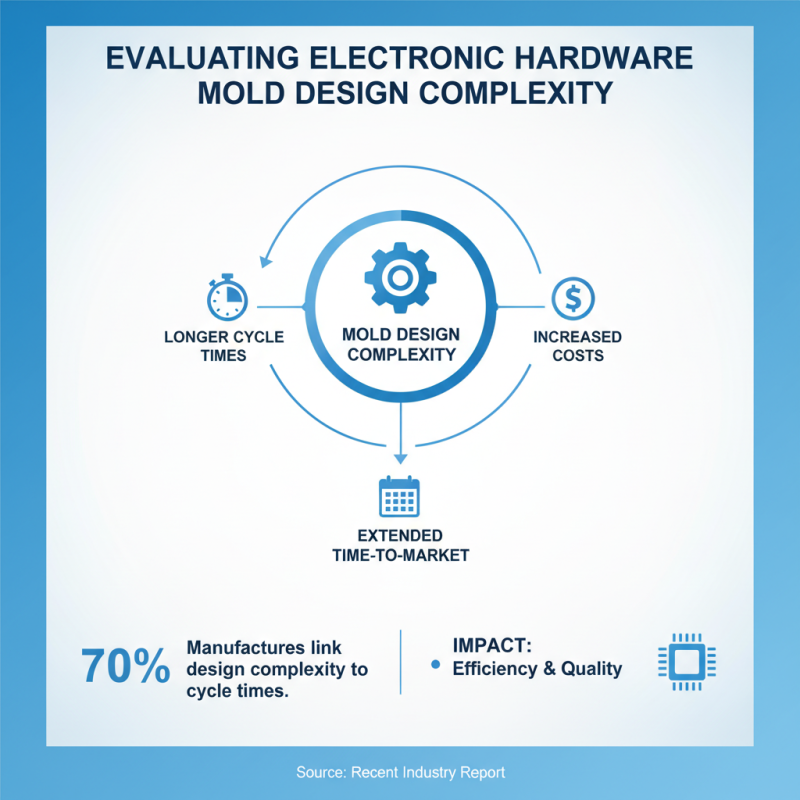
Choosing the right electronic hardware molds hinges on evaluating their design complexity. This complexity can greatly impact production efficiency and product quality. According to a recent industry report, over 70% of manufacturers recognize that mold design intricacies directly correlate with cycle times. This means that a more complex design might lead to longer production cycles, increasing costs and extending time-to-market.
Furthermore, the mold's intricacies must align with the final product's specifications. Precise features, such as tolerances and surface finishes, require a careful balance. A study found that around 60% of defect-related issues stem from inadequate mold designs. These issues often result in costly rework or scrapped materials, prompting a need for continuous evaluation.
Reflecting on these complexities is essential. Many teams overlook the importance of prototype testing. Investing in early-stage testing can reveal potential hurdles in design before full-scale production begins. Recognizing that complexity can lead to unforeseen challenges allows teams to adjust their approaches. This proactive stance ensures a smoother production process and ultimately results in higher quality products.
Factors to Consider When Choosing a Mold Manufacturer
When selecting a mold manufacturer, several factors come into play. Experience is crucial. Look for a company that has been in the industry for several years. A manufacturer with a solid background often demonstrates reliability and skill. Their past projects can reveal the quality of their work. Specialized knowledge in electronic hardware molds is equally important. Ensure they understand your specific needs.
Another important aspect is the manufacturing process. A good manufacturer uses advanced technology. This can significantly affect the precision of the molds. Ask about their quality control measures. Consistent quality checks prevent issues down the line. Don't hesitate to request samples or prototypes. This step can help you assess their capabilities.
Customer service should not be overlooked. An approachable team that communicates effectively adds to your experience. Problems may arise during the mold-making process. Having support can make a considerable difference. Always consider the manufacturer’s willingness to adapt to your needs. A flexible partner is often a reliable one.
Choosing Between Standard and Custom Electronic Hardware Molds
When it comes to electronic hardware molds, choosing between standard and custom options can be challenging. Standard molds are widely available and often more cost-effective. They work well for common products and can reduce production time. However, these molds may not always meet specific design needs. If your product has unique features, standard molds might limit your creativity and functionality.
On the other hand, custom electronic hardware molds offer tailored solutions. They allow for precise design specifications that align with your product requirements. With custom molds, you gain the advantage of optimizing fit and performance. However, they often involve higher costs and longer lead times. It is crucial to weigh these factors based on your project’s goals and budget.
Consider your project’s complexity. For straightforward designs, standard molds could suffice. Yet, if innovation is key, investing in custom molds may prove more beneficial. Evaluate your needs carefully and think long-term. Consider potential revisions in design. What if your product evolves? This reflection can help guide your choice effectively.