10 Essential Tips for Choosing the Right Automotive Parts Molds?
Choosing the right automotive parts molds is crucial for the success of an automotive manufacturing process. According to recent industry reports, the global automotive mold market is expected to grow at a CAGR of 4.2% from 2021 to 2026. This growth signifies the increasing demand for high-quality, efficient molds that can produce durable automotive components. Automotive parts molds play a pivotal role in determining product quality and performance.
In this competitive landscape, making informed decisions becomes vital. It's essential to understand the varying characteristics of molds. Not every mold is suitable for all applications. The materials used, design intricacies, and production techniques vary widely. A poor choice can lead to increased production costs and delays. Therefore, knowing how to assess these factors can make a significant difference.
Flaws in mold selection may occur due to limited research or oversight. Even minor errors can result in significant production setbacks. As the automotive industry evolves, staying updated with the latest technologies and trends in molds is essential. Investing time in the selection process may seem tedious, but it is crucial for optimizing production efficiency and ensuring customer satisfaction.

Understanding the Importance of Automotive Parts Molding in Manufacturing
Automotive parts molding plays a vital role in car manufacturing. Quality molds ensure that parts fit perfectly and function efficiently. Precision in molding affects the overall performance of vehicles. If the parts don't work well, it can lead to failures. This reality makes the selection of molds crucial.
Choosing the right molds can be challenging. Each vehicle has different specifications. Not all molds will meet the required standards. Poorly designed molds can result in defects. These defects may not surface until after production. It’s important to carefully evaluate mold designs.
Consider the material used in molds. Different materials offer various strengths and weaknesses. Factors like durability and resistance to wear are key. It can be tempting to rush this decision, but taking time to reflect on the mold's purpose is essential. Molds should meet both aesthetic and functional demands. Finding the perfect balance can be tough.
Key Factors to Consider When Selecting Automotive Part Molds
When selecting automotive part molds, several key factors must be considered.
Material type is crucial. Different materials can influence the durability and cost.
For instance, steel molds are heavy-duty but expensive. On the other hand,
aluminum molds are lighter and more cost-effective.
According to research by the Society of Plastics Engineers, the longevity of a mold can significantly impact production costs.
A mold's lifespan is estimated to be around 100,000 cycles for aluminum and up to 1,000,000 cycles for steel.
Precision is another vital element. Molds must produce parts that meet specified tolerances.
Tighter tolerances can sometimes lead to higher costs. Misalignment issues can arise if precision is not prioritized.
Studies show that a slight deviation in measurements can lead to a 20% increase in rework.
Additionally, the design complexity of the mold plays a significant role.
Complex designs may require advanced technologies, increasing both lead time and expense.
It's worth noting that initial costs may not reflect long-term value.
Some molds might appear cheaper upfront, but they can require more maintenance and repairs.
Regular maintenance can become costly and may detract from productivity.
A reflective approach to mold selection can save companies time and resources in the long run. Balancing cost, precision, and design requirements is essential for optimal outcomes.
Material Selection: Choosing the Right Polymer for Automotive Applications
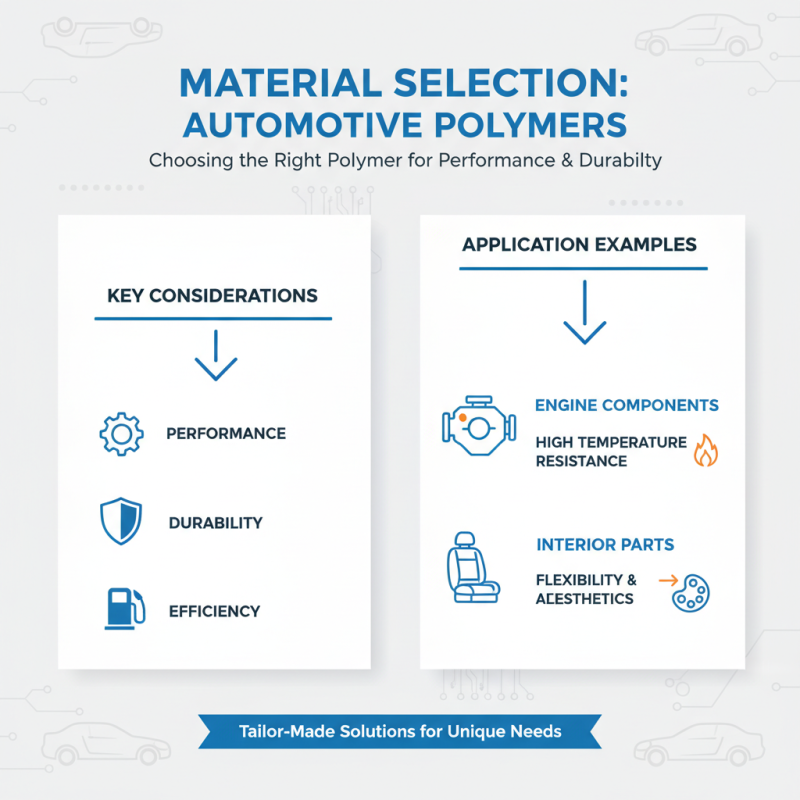
Choosing the right polymer is critical in automotive applications. The material affects performance, durability, and overall efficiency. Each application has unique requirements. For instance, temperature resistance is essential for engine components. In contrast, flexibility may be more vital for interior parts.
When selecting materials, consider these tips. Understand the environment in which the parts will operate. Will they face extreme temperatures or chemical exposure? Next, evaluate the strength and weight ratios. Sometimes, lighter materials perform better, but strength must not be compromised.
Polymer choices are vast, and each has its advantages and drawbacks. Some polymers may not perform well under certain conditions. Reflect on your specific needs. You may find that a more expensive option might save costs in the long run. Making informed decisions will enhance performance and safety.
Evaluating Mold Durability and Maintenance for Long-Term Use
When choosing automotive parts molds, evaluating mold durability and maintenance is vital. The life expectancy of these molds can significantly affect production costs. A study from the Society of Plastic Engineers reports that well-maintained molds can last up to 1 million cycles, while neglected ones can fail after just a few thousand. This highlights the importance of regular inspections and timely repairs.
Tip: Look for molds made from high-quality materials. Steel molds may offer better durability compared to aluminum. However, aluminum molds can be lighter and more cost-effective for certain low-volume productions. Consider your specific needs.
Mold maintenance is often overlooked. Regular cleaning is crucial to prevent build-up that can hinder performance. A report indicates that 30% of molds fail due to inadequate cleaning practices. It's essential to implement a routine maintenance schedule and document all repairs made. This practice helps in extending the life of the mold and ensuring consistent production quality.
Tip: Invest in training for your maintenance personnel. Understanding the nuances of mold care can prevent costly breakdowns. An informed team can identify potential issues early. Think about ways to optimize the maintenance process for maximum efficiency.
Key Factors in Choosing Automotive Parts Molds
Cost Analysis: Balancing Quality and Affordability in Mold Procurement
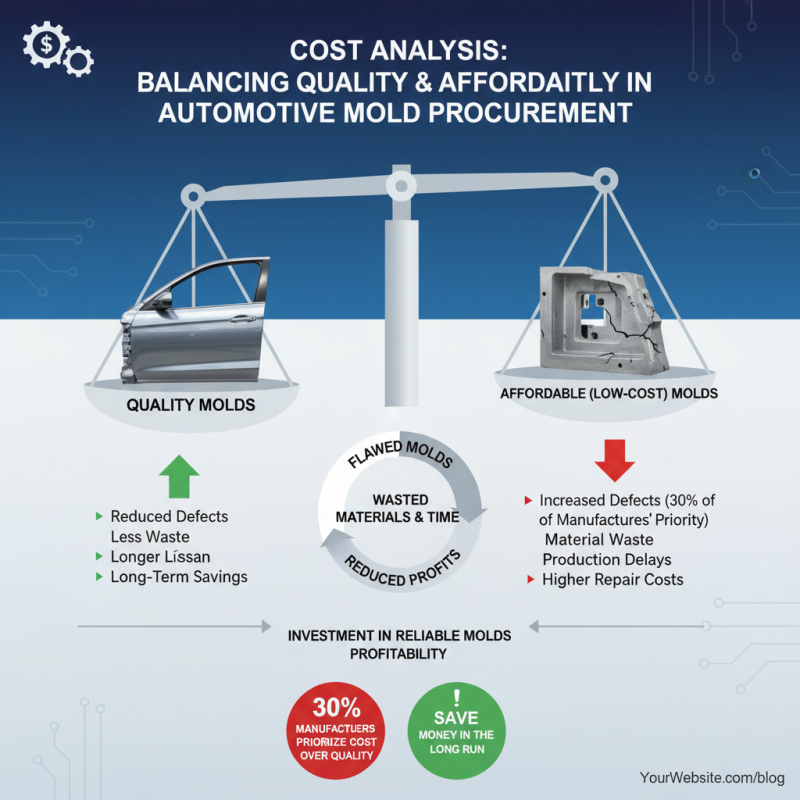
Choosing the right automotive parts molds requires a careful cost analysis. Balancing quality with affordability can be complex. According to recent industry reports, nearly 30% of manufacturers prioritize cost over quality. This often leads to increased defects and repairs down the line. A flawed mold can result in wasted materials and time. Investing in reliable molds can save money in the long run.
In the automotive sector, the average cost of high-quality molds ranges from $10,000 to $150,000. This varies by complexity and application. A lower price tag may seem appealing, but it often compromises durability. Shops using inferior molds report a 25% higher failure rate. This is a crucial consideration for manufacturers aiming for efficiency. Poor-quality molds can lead to production halts and missed deadlines.
Analyzing the total cost of ownership is essential. Beyond the initial purchase, maintenance and production costs matter. A premium mold may have higher upfront costs but lower maintenance. Additionally, molds that produce higher-quality parts reduce waste. Therefore, a focus on cost should not overlook the broader financial impact. Engaging with experienced suppliers can provide insights into finding the right balance.