Why is Die Casting Mold Essential for Efficient Manufacturing Processes?
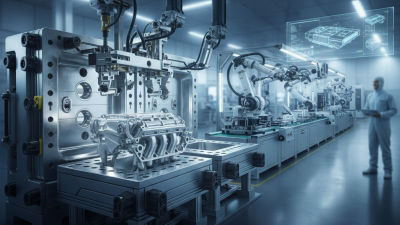
In the world of manufacturing, the significance of a "Die Casting Mold" cannot be overstated. Experts like John Miller, a veteran in the die casting industry, emphasize this by stating, “A quality mold is the backbone of efficient production.” The design and functionality of the die casting mold play a pivotal role in ensuring high precision and repeatability in the manufacturing process.
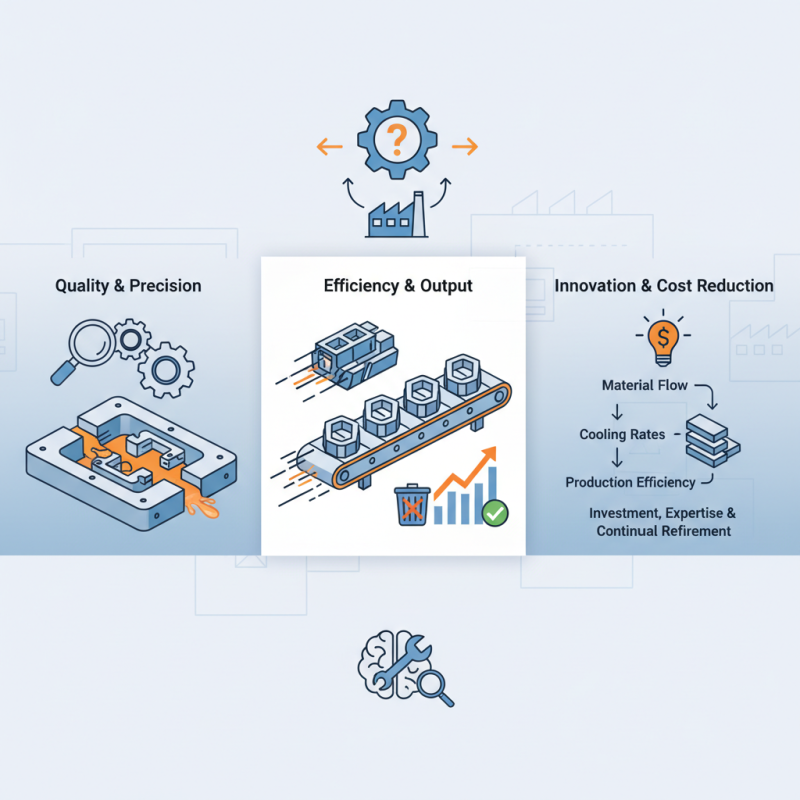
When producing intricate parts, the die casting mold’s architecture impacts not just the quality but also the speed of production. An efficient mold minimizes waste and maximizes output. However, achieving the perfect die casting mold requires investment, expertise, and continual reflection on design flaws. Even seasoned professionals recognize the need for improvement in their mold designs.
For manufacturers aiming to stay competitive, understanding the die casting mold’s importance is essential. It impacts everything—from material flow to cooling rates. Analyzing and refining these elements can lead to advancements in production efficiency and cost reduction. The intricate relationship between the die casting mold and manufacturing efficiency warrants attention and conversation.
The Role of Die Casting Mold in Manufacturing Efficiency
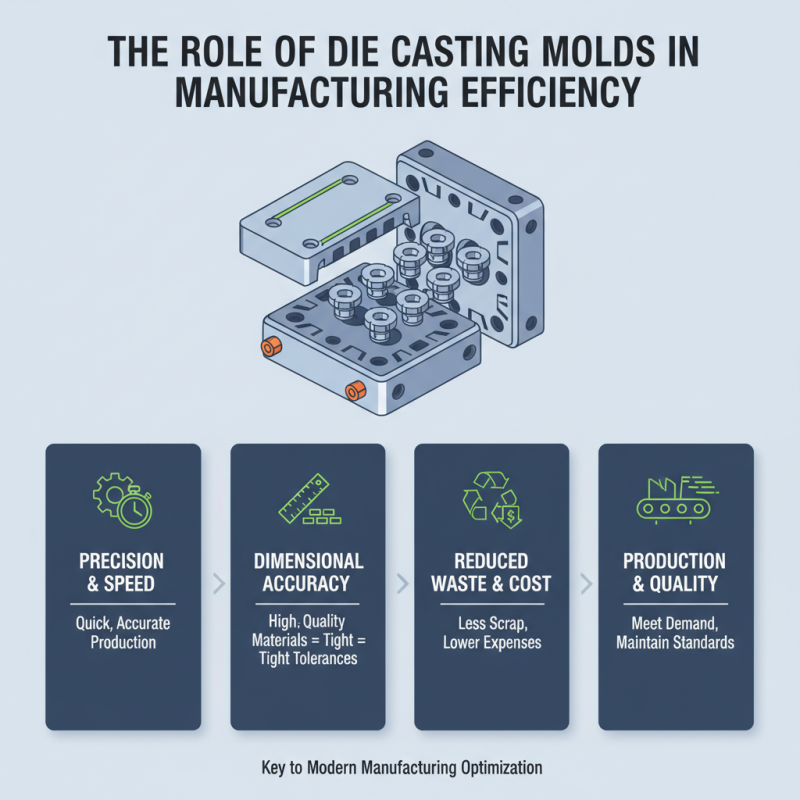
Die casting molds play a vital role in enhancing manufacturing efficiency. These molds, crafted with precision, allow for the quick and accurate production of complex shapes. By using high-quality materials, manufacturers can achieve a high degree of dimensional accuracy. This precision reduces waste, leading to lower production costs. With efficient die casting molds, companies can produce parts at a faster rate, meeting market demands without sacrificing quality.
The design of the mold affects not only production speed but also material utilization. Properly designed molds can minimize material waste and increase the lifespan of tooling. Still, imperfections in mold design can lead to defects in the final product. Regular audits and updates of the mold design are crucial to identifying these flaws. Continuous improvement processes can help maintain and even enhance mold efficiency over time.
In addition to speed and cost, the right die casting mold influences the final product's performance. Variations in mold temperature can affect the flow of molten metal. Cooling rates, often overlooked, play a significant role in part strength and surface finish. Thus, a careful assessment of all factors is necessary for optimal results. Realizing that these molds can’t be perfect is essential; therefore, ongoing evaluation and adaptation are key to long-term success in manufacturing.
Understanding the Components of Die Casting Molds
Die casting molds are critical for efficient manufacturing processes. These molds are designed for high accuracy and speed. They play a vital role in determining the quality and consistency of the finished product. According to a report by MarketsandMarkets, the global die casting market is expected to reach $82.3 billion by 2026, underscoring the importance of this manufacturing technique.
Understanding the components of die casting molds can enhance production efficiency. Key elements include the mold base, inserts, and cores. The mold base supports the entire structure. Inserts can be replaced as they wear out, while cores form the internal features of castings. Properly maintained molds can yield thousands of castings. However, mold wear can lead to increased costs and downtime. Regular assessments of mold condition are necessary to prevent unintended failures.
In practice, manufacturers often face challenges with mold design and material selection. Not every mold material can withstand the high pressures and temperatures involved in die casting. Some molds require cooling channels, which add complexity. An estimated 15% of production losses can be traced back to poor mold performance. Continuous innovation and testing are essential to improve the reliability of die casting molds.
Advantages of Using Die Casting Molds in Production
Die casting molds play a crucial role in efficient manufacturing processes. They enhance production speed while ensuring high accuracy in the dimensions of components. According to a recent industry report, the die casting industry is projected to grow at a CAGR of 7.3% from 2021 to 2026. Such growth illustrates the substantial benefits that die casting molds offer.
One major advantage of using die casting molds is their ability to produce complex shapes with excellent surface finishing. This precision can minimize post-processing needs. For instance, die cast parts typically have tolerances as tight as +/- 0.1 mm. This level of accuracy reduces material waste and improves overall efficiency. However, challenges such as initial high costs and the need for skilled labor should not be overlooked.
Moreover, die casting molds are capable of producing large volumes of parts quickly. They can deliver thousands of units within a short time frame, making them favorable for mass production. According to industry data, companies can achieve cycle times as low as 15 to 30 seconds per part. Reliability is another key aspect; proper mold maintenance can extend their operational lifespan significantly. Yet, improper handling can lead to defects that affect production schedules.
Advantages of Using Die Casting Molds in Production
Impact of Mold Design on Product Quality and Production Speed
The design of a die casting mold significantly impacts product quality. A well-crafted mold ensures that molten metal fills all cavities uniformly. This uniformity prevents defects like air pockets and weak spots. Such issues can lead to costly rework or product failure. Engineers must focus on precise mold designs to facilitate optimal thermal management. Cooling channels affect how quickly the metal solidifies, which in turn influences the final product's strength.
Production speed is also closely linked to mold design. Efficient molds minimize the cycle time of each cast. The right technology can speed up the molding process while maintaining quality. However, even minor design flaws can slow production. It’s vital to continually assess mold performance. Regular evaluations help identify areas for improvement, ensuring that adjustments are made before they become significant problems. This ongoing process is crucial for manufacturers aiming to stay competitive.
Why is Die Casting Mold Essential for Efficient Manufacturing Processes? - Impact of Mold Design on Product Quality and Production Speed
| Dimension |
Description |
Impact on Quality |
Impact on Production Speed |
| Material Selection |
Choosing appropriate alloys for specific applications. |
Improves durability and strength of casted products. |
Influences cooling time, affecting cycle rates. |
| Mold Design Complexity |
Complex shapes and features in the mold. |
Enhances aesthetic and functional traits of products. |
May require longer production setup times. |
| Cooling Channels |
Design and layout of cooling channels in molds. |
Ensures uniform cooling, reducing defects. |
Optimizes cooling time, increasing throughput. |
| Surface Finish |
Quality and texture of mold surface. |
Directly affects the final product's finish and friction. |
Higher quality finishes may require additional processing time. |
| Wear Resistance |
Durability of mold materials against wear and tear. |
Reduces maintenance needs and prolongs life of the mold. |
Minimizes production downtime due to mold replacement. |
Maintenance Techniques for Die Casting Molds to Ensure Longevity
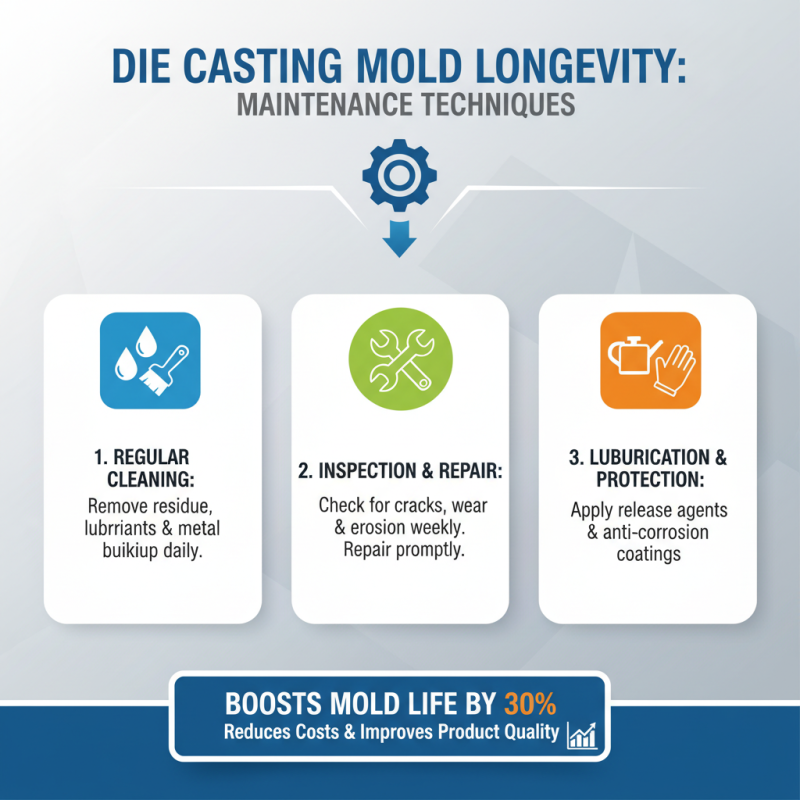
Die casting molds are crucial for effective manufacturing processes. Proper maintenance of these molds significantly enhances their lifespan, resulting in better production efficiency. Research shows that regular upkeep can extend mold life by 30% on average. This not only reduces operational costs but also improves the quality of the final products.
Regular cleaning is a vital maintenance technique. Mold surfaces can accumulate residues, which can lead to defects in casting. It is essential to utilize appropriate cleaning solutions that do not harm the mold material. At the same time, checking for wear and tear should be a routine task. Signs of damage, even minor, can escalate into significant issues if neglected. A study revealed that over 15% of mold failures were due to inadequate inspections.
Lubrication also plays a key role in mold maintenance. Effective lubrication reduces friction and wear, ensuring smooth operation. However, it's essential to use the right type and amount of lubricant. Over-lubrication can attract contaminants. Uneven application can create hotspots, leading to premature mold failures. Companies must rely on trained personnel to ensure these techniques are applied consistently.