2026 How to Choose the Right Automotive Mold for Your Needs?
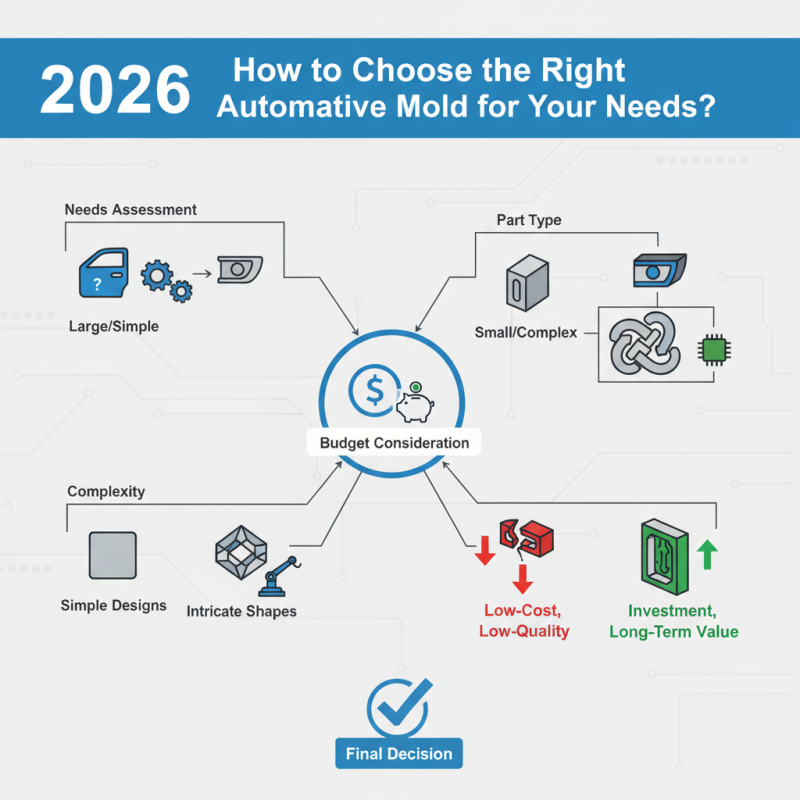
Choosing the right automotive mold is crucial for manufacturers. The right mold affects production quality and costs. Many options exist, and selecting one can be overwhelming. Automotive molds come in various shapes, sizes, and materials, making the choice difficult.
Consider your specific needs. Think about the type of vehicle parts you want to produce. Are they large or small? Complexity plays a big role too. Simple designs may require basic molds, while intricate shapes need advanced technology.
Reflect on your budget as well. Costs can vary widely among different molds. Sometimes, a lower-priced option may not deliver the desired quality. Investing in the right automotive mold pays off in the long run. Make sure to analyze all aspects carefully before making a final decision.
Understanding Automotive Molds: Types and Applications
When selecting an automotive mold, understanding the types and their applications is crucial. There are several mold types that cater to diverse automotive parts. Injection molds are popular for producing complex components. Blow molds create hollow items, while compression molds are best for heavier parts. Each type serves specific needs within the automotive industry.
Tips for choosing the right mold: Consider the production volume needed. High-volume production may justify the cost of a more expensive mold. Evaluate the material type used in your component, as this can affect mold choice. Sometimes, molds may not perform as expected. Maintaining them is vital to ensure they meet production standards. Periodic checks can prevent future complications.
Different automotive applications require tailored molds. For interiors, molds must provide a perfect fit for aesthetics. For under-the-hood components, durability is crucial. Always reflect on the end-use, especially for safety-critical parts. It’s easy to overlook small details, but they can significantly impact performance. Make sure to weigh all factors before investing.
Key Factors to Consider When Selecting Automotive Molds
When selecting automotive molds, consider several key factors. Material choice is crucial. Different materials impact strength and durability. For example, aluminum is lightweight. Steel offers strength. Each has its own pros and cons. Moreover, think about the mold's design complexity. More intricate designs can increase costs and lead times. Simpler molds may speed up production but might lack specific features.
Another factor to evaluate is the mold’s lifecycle. High-volume runs may require more robust molds. Lower volumes could mean a focus on cost-efficiency. A less durable mold may suffice for short runs but lead to issues later. Quality assurance is vital. Poorly made molds can cause defects in parts, leading to recalls.
It’s important to reflect on your needs. Not every mold suits every project. Consider if your needs might change over time. Flexibility in design may save you from future complications. Seek expert advice to clarify your requirements. Balancing cost, quality, and performance is essential for achieving the best result.
Key Factors to Consider When Selecting Automotive Molds
Compatibility of Automotive Molds with Specific Materials
Choosing the right automotive mold involves understanding material compatibility. Each composite or polymer has unique characteristics. For instance, thermoplastics require specific mold designs to achieve optimal results. Meanwhile, thermosetting plastics demand different techniques for effective shaping.
Compatibility is crucial. Using a mold designed for one material on another can lead to poor production quality. Imagine the frustration of a mold that warps or cracks prematurely. Testing mold materials in different conditions can help identify potential issues. This step is sometimes overlooked, but it’s essential for long-term success.
Moreover, every project has its challenges. Not all molds will perform equally, regardless of material choice. Small flaws in mold design can result in significant misunderstandings during production. Regular evaluations of mold performance can help catch these flaws early. Experimenting might reveal surprising insights into how different materials interact.
Evaluating the Quality and Durability of Automotive Molds
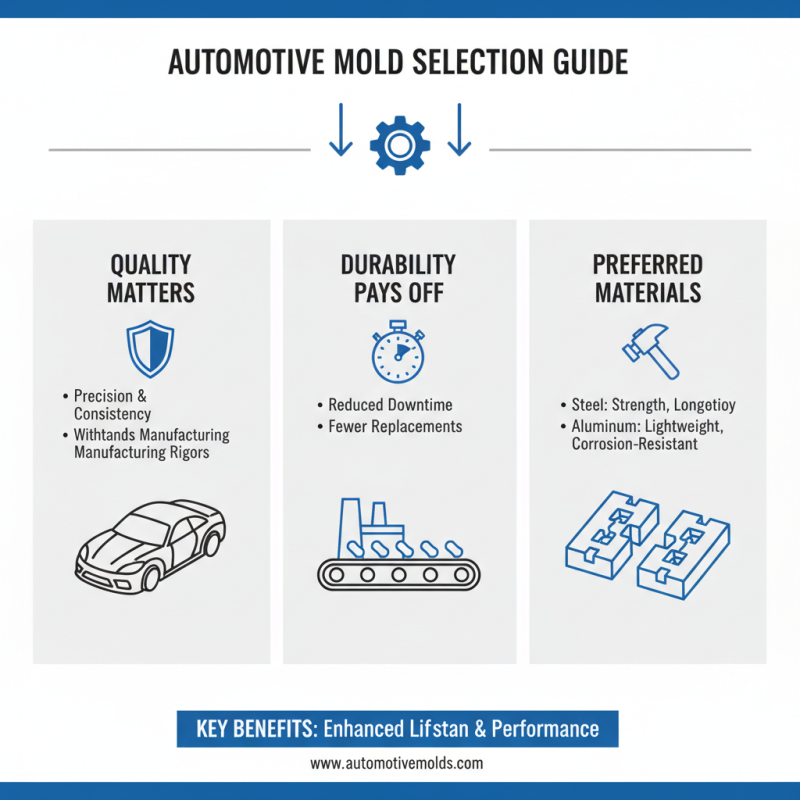
When selecting automotive molds, quality and durability are crucial. High-quality molds can withstand the rigors of manufacturing. They offer better precision and consistency. A durable mold reduces the frequency of replacements, minimizing downtime. Look for materials known for their strength. Steel and aluminum are often top choices. These materials enhance the mold's lifespan considerably.
Testing is vital when evaluating molds. User feedback can provide insights into their performance. Pay attention to any reported issues. A mold that chips or deforms under stress may not be suitable. Additionally, consider the design. Simplicity often leads to greater durability. Complicated shapes can be more prone to flaws.
Factors like maintenance should not be overlooked. Regular care promotes longevity. However, not all users have the time for this. It's essential to weigh convenience against quality. Remember, investing in a mold is not just about the initial cost. It's about the long-term benefits. Striking the right balance is challenging but necessary.
Cost Analysis: Budgeting for Your Automotive Mold Needs
Choosing the right automotive mold is crucial. A large part of this decision is budgeting. The automotive mold market is expected to grow significantly. According to industry reports, the global market value will reach $5.9 billion by 2025. Understanding costs will help you make informed choices.
When budgeting, consider materials and labor. The average cost of an automotive mold can range from $5,000 to over $100,000. Factors like mold complexity influence pricing. High-quality molds may have higher initial costs. However, they often lead to better production efficiency. This can save money in the long run.
Tips: Always get multiple quotes. Comparing vendors can reveal significant differences in pricing and services. Don't forget to factor in maintenance costs. A well-maintained mold can last significantly longer. Lastly, consider unexpected expenses. Sometimes, cheap options lead to more costs in repairs or replacements. Reflect on each choice carefully; it all adds up.
2026 How to Choose the Right Automotive Mold for Your Needs? - Cost Analysis: Budgeting for Your Automotive Mold Needs
| Mold Type |
Material |
Average Cost ($) |
Durability (Cycles) |
Lead Time (Weeks) |
| Injection Mold |
Steel |
5,000 |
1,000,000 |
12 |
| Blow Mold |
Aluminum |
3,000 |
500,000 |
10 |
| Compression Mold |
Thermosetting Plastics |
2,500 |
300,000 |
8 |
| Transfer Mold |
Steel |
4,500 |
600,000 |
9 |
| Die Mold |
Gregory Alloy |
6,000 |
1,200,000 |
15 |