Why Choose Advanced Mold Technology for Your Manufacturing Needs?
In today’s competitive manufacturing landscape, businesses seek reliable solutions to optimize processes. Advanced Mold Technology stands at the forefront, revolutionizing how products are manufactured. Renowned expert Dr. Emily Zhao, a leading figure in the field, emphasizes, "Adopting Advanced Mold Technology can significantly reduce production costs while enhancing quality."
This technology offers precision and efficiency, crucial for maintaining market relevance. Manufacturers can create complex designs with remarkable accuracy. Consequently, they elevate product standards and meet consumer demands effectively. However, many hesitate to transition to newer technologies. The learning curve can seem daunting, and initial investments may appear significant.
Nevertheless, the long-term benefits of Advanced Mold Technology often outweigh these concerns. Companies that embrace this innovation are likely to see improved operational efficiency and reduced waste. Overcoming the initial challenges can lead to transformative results. Embracing this technology might require a shift in mindset and strategy, but the potential for growth is immense.

What is Advanced Mold Technology?
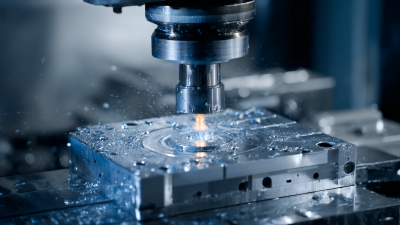
Advanced Mold Technology (AMT) revolutionizes the manufacturing landscape. It enables precise, efficient, and scalable production processes. AMT focuses on creating ideal molds with advanced materials and techniques. This approach reduces waste and increases productivity, making it vital for modern manufacturing.
Tips: When choosing mold technology, assess your production scale. Smaller projects may benefit from simpler molds. Larger productions require complex designs to meet demands efficiently.
AMT also emphasizes user-friendly designs. This allows manufacturers to adapt quickly to changes in product specifications. Efficiency is paramount, but flexibility can often face challenges. Many companies find it hard to balance both needs effectively. Addressing this might involve revisiting workflow processes.
Tips: Regularly review your mold designs. This can enhance performance over time. Small adjustments can yield significant improvements in manufacturing efficiency.
Why Choose Advanced Mold Technology for Your Manufacturing Needs? - What is Advanced Mold Technology?
| Feature |
Description |
Benefits |
| Precision Engineering |
Advanced technology uses CNC machining for high precision molds. |
Ensures consistent quality and reduces production defects. |
| Material Versatility |
Supports a wide range of materials including plastics, metals, and composites. |
Facilitates the production of diverse products for various industries. |
| Rapid Prototyping |
Quickly create prototype molds for testing and validation. |
Accelerates development time and reduces time to market. |
| Automation Integration |
Molds can be designed to work seamlessly with automated production lines. |
Enhances efficiency and lowers labor costs. |
| Sustainability Practices |
Utilizes eco-friendly materials and processes to minimize waste. |
Supports corporate responsibility and reduces environmental impact. |
Key Benefits of Using Advanced Mold Technology in Manufacturing
Advanced mold technology brings significant advantages to the manufacturing landscape.
One key benefit is precision. A study by the Manufacturing Institute found that businesses utilizing advanced molding achieve up to
20% greater accuracy in their production processes. This level of precision minimizes waste and rework,
leading to substantial cost savings.
Speed is another important factor. With improved tooling and design capabilities,
advanced mold technology reduces cycle times. The same report highlights that companies can reduce their production time by
up to 30%. However, this doesn't come without its challenges. Transitioning to advanced techniques
often requires additional training and investment in new equipment.
Moreover, the adaptability of advanced mold technology allows for easier modifications. In today's fast-paced market,
being responsive is vital. Manufacturers can quickly adapt designs to meet changing customer needs. Yet, it’s crucial to reflect on the steep learning curve involved.
Not all teams may transition smoothly, which can temporarily hinder production efficiency. Balancing innovation with existing
production practices is necessary for sustainable growth.
Comparison of Traditional vs. Advanced Mold Techniques
When examining traditional versus advanced mold techniques, a clear distinction emerges. Traditional methods often rely heavily on manual labor. This can lead to human error and inconsistencies in product quality. Reports indicate that around 30% of defects in molded parts arise from human mistakes. In contrast, advanced mold technology utilizes automation and precision engineering. Studies show that these methods can improve production efficiency by up to 50%. This reduction in error rates is a significant advantage.
Tip: Assess your production needs carefully. Determine whether manual intervention in your process is causing delays or errors.
Another critical aspect is the material used. Traditional molds are often crafted from less durable materials. They may wear down quickly, increasing costs and downtime. Advanced molds often use long-lasting composites, ensuring consistency over time. A report by the Injection Molding Association states that switching to advanced materials can reduce production costs by 20% over time.
Tip: Regularly review your mold materials. Investing in better quality may seem costly upfront but offers long-term savings.
Ultimately, while traditional methods have their place, adopting advanced techniques appears to be a forward-thinking choice. Manufacturers must consider not only current efficiency but also long-term sustainability and reliability. Embracing these advanced technologies can significantly reshape production capabilities.
How Advanced Mold Technology Enhances Product Quality and Efficiency
Advanced Mold Technology plays a crucial role in modern manufacturing. By utilizing cutting-edge techniques, it enhances product quality significantly. According to industry reports, companies using advanced mold processes can increase efficiency by up to 30%. This is largely due to improved precision and reduced material waste during production.
One major benefit is the ability to create complex designs that remain consistent across batches. This consistency not only elevates product quality but also builds customer trust. When customers see uniformity in products, loyalty increases. However, the initial investment in advanced technology can be daunting for some manufacturers.
Tips: Invest in training personnel. A well-trained team can maximize the benefits of advanced mold technology. Consider conducting regular reviews of production processes, too. It’s important to identify where improvements can be made.
Additionally, while advanced mold technology presents benefits, there are challenges. The transition to new systems may require time and resources. Some manufacturers report frustrations with the learning curve involved. Addressing these concerns early can lead to smoother implementation. Overall, embracing advanced technology can position manufacturers for long-term success.
Future Trends in Advanced Mold Technology for Manufacturing Industries
The manufacturing landscape is witnessing a seismic shift due to advanced mold technology. Industry reports indicate that by 2025, the global market for advanced mold technology is projected to reach $9.3 billion. This growth signals a greater reliance on precision and efficiency within manufacturing sectors.
One significant trend is the adoption of additive manufacturing in molding processes. A recent study revealed that 64% of manufacturers are exploring 3D printing for mold designs. This trend not only reduces lead times but also minimizes material waste. Advanced mold techniques enable customization at unprecedented levels, catering to specific product requirements.
**Tips:** Consider integrating additive manufacturing to enhance production efficiency. Regularly updating your mold designs can lead to improved performance and reduced costs.
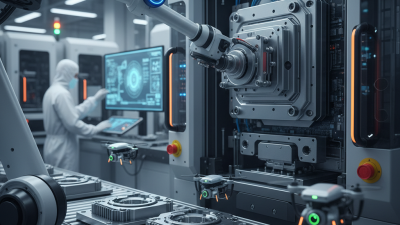
Another emerging trend is the increasing use of smart technology and automation. Data indicates that automated molding processes can enhance productivity by 30%. However, implementing these technologies requires careful planning. Companies must balance innovation with existing workflows.
**Tips:** Evaluate the costs versus the benefits of automation in your production line. Pilot projects can help identify potential pitfalls before a full-scale rollout.
Future Trends in Advanced Mold Technology for Manufacturing Industries
This chart illustrates the projected trends in advanced mold technology adoption across various manufacturing industries from 2023 to 2028. The data reflects the increasing focus on efficiency, sustainability, and precision in manufacturing processes.