Top Tips for Analyzing Mold Market Trends Globally?
Analyzing the mold market trends globally is essential for businesses and researchers alike. The Analysis of Mold Market Trends reveals important insights into production, consumption, and emerging technologies. Understanding these dynamics can help industries adjust their strategies and improve resilience.
Mold market trends show variations across different regions. This inconsistency can confuse analysts and decision-makers. For example, varying regulations and consumer preferences impact mold production significantly. Failing to address these factors can lead to misguided investments.
By closely monitoring global mold market trends, stakeholders can uncover opportunities and risks. However, the complexity of the market requires careful consideration. Trends often shift due to economic changes or environmental factors. Therefore, consistent analysis is crucial for achieving reliable outcomes in this ever-evolving landscape.
Understanding the Mold Market: An Overview of Key Trends
The mold market has shown diversification recently. Understanding its key trends is essential for businesses and analysts alike. The global demand varies across regions. Some areas show rapid growth, driven by industrial applications. Others experience stagnation, highlighting the need for strategic insights.
Embracing data analytics is vital. Companies should utilize market research to identify emerging trends. Consistent monitoring of consumer preferences can unveil new opportunities. Collaborating with industry experts adds credibility.
Consider local regulations and environmental factors. These elements can significantly impact market dynamics. Some regions may favor eco-friendly alternatives. Stay agile and adapt your strategies accordingly. A keen eye on competition is necessary, as it reveals market gaps and potential threats.
Global Mold Market Trends Analysis
Identifying Major Global Players in the Mold Industry
The mold industry is witnessing significant growth globally. Companies are adopting advanced technologies. They are focusing on sustainable practices. This shift is altering market dynamics.
Key players in the mold industry span different regions. Asia-Pacific leads in production, showcasing innovative designs. North America is strong in research and development. Europe focuses on quality and compliance. Each region has its unique strengths and challenges.
Tracking these companies is essential. Analyzing their strategies can reveal market trends. However, it's vital to consider varying regulatory environments. Some companies may struggle to adapt. Understanding their strengths allows for better investment decisions and partnerships.
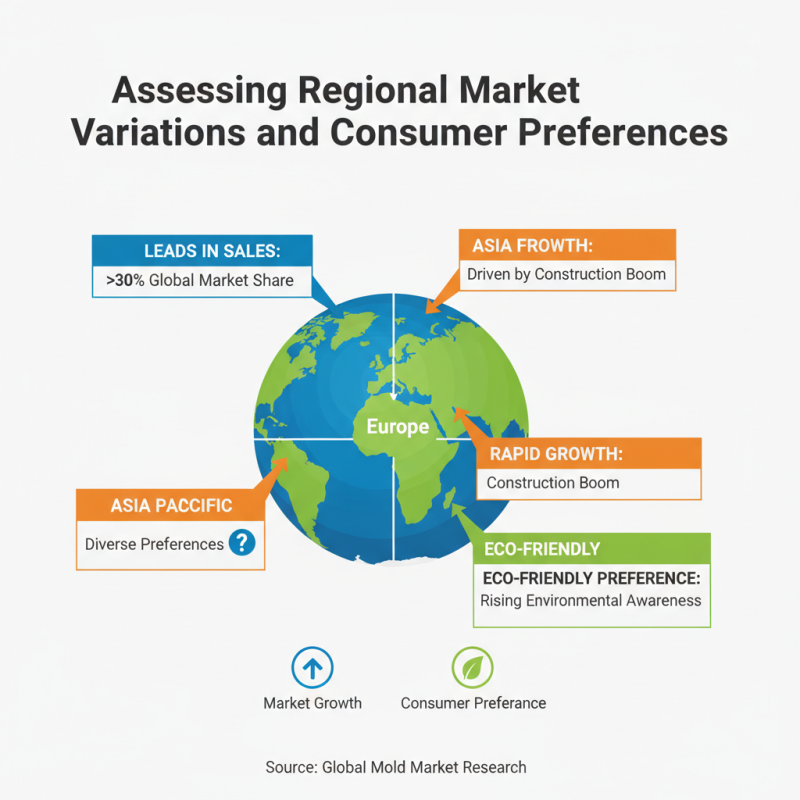
Assessing Regional Market Variations and Consumer Preferences
Understanding regional market variations is essential for analyzing mold market trends globally. Different areas show unique consumer preferences. For instance, research indicates that North America leads in mold product sales, accounting for over 30% of the global market share. In contrast, Asia Pacific is rapidly growing due to rising construction activities. Consumers in Asia tend to prefer eco-friendly products, reflecting a growing environmental consciousness.
Tips: Pay attention to local regulations that influence mold product standards.
Cultural factors also play a role. In Europe, for instance, consumers prioritize product efficacy. Meanwhile, in Latin America, affordability often trumps other considerations. A report from XYZ Research highlights how cost-sensitive markets value budget-friendly options without compromising quality. Gathering insights into these preferences can help businesses tailor their offerings effectively.
Tips: Conduct surveys to gauge consumer attitudes in different regions.
Emerging trends, such as increased online shopping, shift purchasing behaviors. This is especially true in regions with strong digital infrastructures. However, brands must adapt to various local e-commerce environments. Ensuring a seamless shopping experience can enhance customer satisfaction and loyalty, especially in competitive markets. Keep an eye on these shifting dynamics to stay ahead in the mold market.
Forecasting Future Trends and Opportunities in the Mold Market
The mold market is evolving rapidly, driven by technological advancements and changing consumer preferences. Forecasting trends in this sector requires a keen understanding of market dynamics. One area of focus is sustainability. Eco-friendly molds are gaining traction as businesses seek greener solutions.
Analyzing historical data can reveal patterns. Look for fluctuations in demand during different seasons. This can help in predicting sales for the coming year. Observing competitors can also provide insights. Note their strategies and product launches.
Stay informed about regulatory changes. New guidelines may impact manufacturing processes. Understanding these elements can guide investment decisions. Networking with industry experts can offer invaluable perspectives. Their firsthand experience can highlight overlooked opportunities in the mold market.